Best mattresses balancing comfort and support for side sleepers
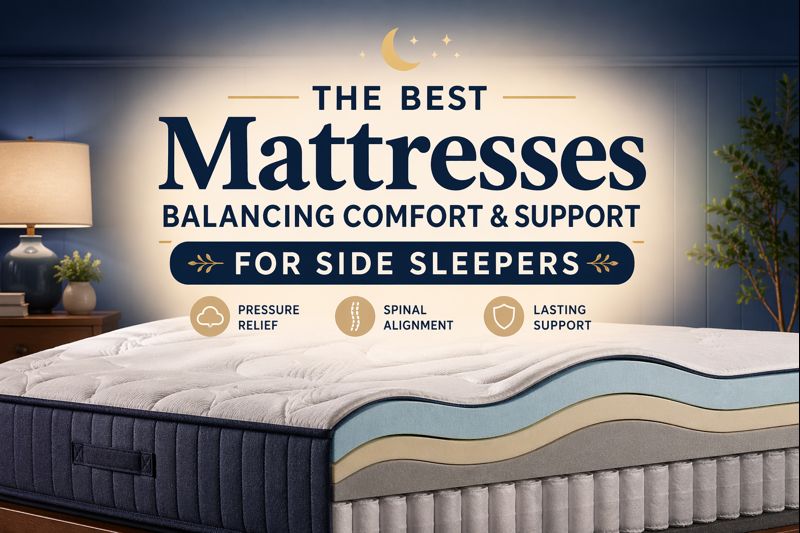
If you sleep on your side, you’ve probably felt that familiar mix of shoulder pressure and hip discomfort when your mattress is either too hard or too soft. The sweet spot lies somewhere in between—where gentle cushioning meets solid support. A mattress that blends a soft, contouring surface with a supportive core helps keep your spine aligned while easing pressure points, so you wake up without stiffness or aches.
To make your search easier, we’ve done the heavy lifting for you. After diving into countless customer reviews, comparing highly rated options, and evaluating real-world performance, we’ve narrowed down the most reliable choices. We also considered popularity and consistent buyer satisfaction, so you can skip the guesswork and focus on finding the right fit for your sleep style.
How We Selected These Products
We used an advanced AI-powered research approach to analyze thousands of user experiences and expert insights across trusted platforms. This allowed us to identify patterns in comfort, durability, and overall satisfaction. By combining data-driven analysis with genuine customer feedback, we’ve created a transparent and reliable shortlist you can trust.
Overviews
Zinus Green Tea Memory Foam


This memory foam mattress is designed to provide adaptive support with a contouring feel that can help relieve pressure points, which is important for side sleepers. Its layered foam construction aims to cushion areas like the shoulders and hips while maintaining overall support. While it leans more toward a softer feel, it can suit those who prefer a plush surface, though it may not offer enough firmness for sleepers needing stronger structural support.
Pros
- Contours closely to the body, helping reduce pressure on shoulders and hips for side sleepers
- Foam layers provide motion isolation, making it suitable for couples
- Infused materials help maintain freshness over time
- Offers a comfortable, cushioned sleeping surface for those who prefer a softer feel
Cons
- May lack the firmer support some side sleepers need for proper spinal alignment
- Can retain heat compared to more breathable mattress types
- Not ideal for those who prefer a more responsive or bouncy surface
- Support may decrease over time with heavy or frequent use
Verdict
A good option for side sleepers who prefer a softer, contouring feel, but it falls short for those seeking a balanced combination of plush comfort and firm support. Best suited as a budget-friendly, comfort-focused choice rather than a fully balanced solution.
Amazon Basics Plush Memory Foam

This memory foam mattress features a plush surface designed to gently contour the body, helping relieve pressure points around the shoulders and hips—key areas for side sleepers. Its foam layers aim to provide a balance of comfort and support, though it leans more toward a softer feel. While it can enhance comfort for those who enjoy cushioning, it may not deliver the level of firmness some sleepers need for optimal spinal alignment.
Pros
- Plush surface helps cushion pressure points, improving comfort for side sleepers
- Foam construction absorbs motion, reducing sleep disturbances for partners
- Lightweight and easy to set up compared to traditional mattresses
- Offers a cozy, body-hugging feel that many users find relaxing
Cons
- Lacks stronger underlying support for those needing a firmer feel
- May trap heat, which can be uncomfortable for warm sleepers
- Less responsive, making movement and repositioning slightly harder
- Durability may be limited with long-term use
Verdict
A comfortable, budget-friendly choice for side sleepers who prefer a soft, cushioning feel, but not the best match for those seeking a true balance between plush comfort and firm support. More suitable for light support needs than long-term structural alignment.
VISCOFLEX Extra Firm Hybrid

This hybrid mattress combines a supportive coil system with foam layers, focusing on a firmer feel for enhanced stability. While the construction can promote proper spinal alignment, its extra firm design may not provide enough cushioning for pressure points like the shoulders and hips, which are critical for side sleepers. It may suit those who prefer strong support, but it lacks the plush comfort typically needed for this sleep position.
Pros
- Hybrid design offers strong structural support and improved airflow compared to all-foam options
- Firm surface helps maintain spinal alignment for sleepers needing extra support
- Coil system adds responsiveness, making movement easier
- More breathable than traditional memory foam mattresses
Cons
- Extra firm feel may create pressure buildup on shoulders and hips for side sleepers
- Lacks the plush cushioning needed for proper pressure relief in this sleeping position
- May feel too rigid for those who prefer a softer, contouring surface
- Not ideal for users specifically seeking a balance between softness and comfort
Verdict
A strong option for those who prefer a very firm sleeping surface, but not well-suited for side sleepers looking for both cushioning and support. It leans too heavily on firmness, making it a less balanced choice for pressure relief.
KOULABR Z Hybrid Mattress

This hybrid mattress combines foam comfort layers with a supportive coil base, offering a medium-firm feel that aims to balance cushioning and stability. The design can help relieve pressure around the shoulders and hips while maintaining proper alignment, which is important for side sleepers. Its construction leans closer to a balanced profile, making it more suitable for those seeking both gentle contouring and reliable support.
Pros
- Balanced feel provides both cushioning and support, ideal for side sleeping comfort
- Hybrid construction improves airflow, helping reduce heat buildup during sleep
- Coil system adds responsiveness, making it easier to change positions
- Helps distribute weight evenly, reducing pressure on key areas like hips and shoulders
Cons
- May not feel soft enough for those who prefer a deeply plush surface
- Motion transfer can be slightly noticeable compared to all-foam mattresses
- Edge support may vary depending on usage over time
- Not suitable for those specifically seeking an ultra-soft or extra-firm feel
Verdict
A well-balanced option that aligns closely with the needs of side sleepers looking for both comfort and support. While not overly plush, it offers a solid mix of pressure relief and stability, making it a strong overall recommendation.
Vesgantti Plush Hybrid Mattress

This hybrid mattress features a plush comfort layer combined with a supportive coil system, aiming to deliver both softness and stability. The cushioned top helps relieve pressure around the shoulders and hips, which is beneficial for side sleepers, while the underlying coils provide needed support to maintain alignment. Its design leans toward a balanced feel, making it a suitable option for those seeking both comfort and support in one mattress.
Pros
- Plush surface provides effective pressure relief for shoulders and hips
- Hybrid design balances softness with underlying support for better alignment
- Coil system enhances airflow, helping keep the mattress cooler
- Responsive structure makes it easier to move and change positions
Cons
- May feel too soft for those who prefer a firmer sleeping surface
- Some motion transfer can occur due to the coil base
- Edge support may not be as strong as firmer hybrid models
- Comfort level may vary depending on body weight and sleep preference
Verdict
A strong choice for side sleepers who want a softer feel without sacrificing support. It offers a good balance between cushioning and structure, making it a reliable option for those seeking both comfort and proper alignment.
How It Works and Who Needs It
A mattress that blends a supportive base with a softer comfort layer works by distributing body weight evenly while cushioning pressure points. For side sleepers, this combination is essential because the shoulders and hips press more deeply into the surface. The top layer gently contours the body, while the core keeps the spine aligned, preventing discomfort and stiffness over time.
This type of mattress is especially useful for:
- Side sleepers who experience pressure buildup around shoulders and hips
- People dealing with mild back or joint discomfort during sleep
- Couples who need motion isolation without sacrificing support
- Sleepers who prefer a balance between softness and stability rather than extremes
What to Look for Before You Buy
When choosing a mattress that offers both cushioning and support for side sleeping, it’s important to focus on materials, construction, and overall feel. A well-designed option should provide enough softness to relieve pressure without allowing the body to sink too deeply. This balance helps maintain healthy spinal alignment, which is critical for long-term comfort.
Start by evaluating the comfort layers. Memory foam and pillow-top designs are popular because they contour closely to the body. However, they should be paired with a supportive base such as high-density foam or individually wrapped coils. Breathability is another key factor, especially if you tend to sleep warm. Hybrid designs often perform better in this area due to improved airflow.
- Look for multi-layer construction that combines a soft top with a supportive core
- Choose breathable materials to help regulate temperature during sleep
- Check motion isolation if you share the bed with a partner
- Consider durability to ensure the mattress maintains its shape over time
Finally, think about your personal comfort preference. Some sleepers may lean toward a slightly softer feel, while others may need more support. Reading user reviews and checking consistent feedback can help you understand how the mattress performs in real-world conditions.
- Prioritize pressure relief for shoulders and hips
- Ensure the mattress supports proper spinal alignment
- Avoid overly soft options that may cause sinking
- Avoid overly firm designs that create pressure points
Common Pros and Cons
Mattresses designed with a balance of softness and support offer a range of benefits, especially for side sleepers. However, like any product, they come with trade-offs that are worth considering before making a purchase.
Pros
- Provides targeted pressure relief, reducing discomfort in key areas like shoulders and hips
- Encourages proper spinal alignment, helping prevent aches and stiffness
- Suitable for a wide range of sleepers due to its balanced feel
- Often includes motion isolation features, making it ideal for couples
- Available in various materials and constructions to suit different preferences
Cons
- Finding the right balance between softness and support can be challenging
- Some models may retain heat, especially those with dense foam layers
- Hybrid options can be heavier and harder to move or set up
- Lower-quality models may lose shape or support over time
- May not satisfy sleepers who prefer extremely soft or very firm surfaces
Is It Worth It?
A mattress that combines cushioning comfort with reliable support is often a worthwhile investment for side sleepers. It directly addresses common pain points by reducing pressure buildup while keeping the spine in a neutral position. This can lead to better sleep quality and fewer aches in the morning.
That said, the value depends on choosing the right model. Not all options achieve the ideal balance, and selecting one that leans too far in either direction can lead to discomfort. Taking the time to compare features and read real user feedback can make a noticeable difference in your overall satisfaction.
For most side sleepers, this type of mattress offers a practical and comfortable solution. When chosen carefully, it delivers a noticeable improvement in both comfort and long-term sleep health.