Best bunk bed mattresses for kids comfort and safety
Choosing the right mattress for a child’s bunk bed isn’t just about comfort—it’s about safety, support, and better sleep every night. Since bunk beds often have height restrictions and unique frame designs, not every mattress will fit properly or perform well. The right option can help your child sleep soundly, stay supported as they grow, and avoid issues like overheating or poor posture.
To make your decision easier, we’ve done the heavy lifting for you. After carefully researching the market, comparing top-rated options, analyzing real customer feedback, and evaluating overall popularity, we’ve narrowed down the most reliable choices. Our goal is simple: save you time and help you confidently pick a mattress that works perfectly for your child’s bunk setup.
How We Selected These Products
We take product selection seriously. Using an advanced AI-powered research module, we analyzed thousands of verified user reviews and expert opinions across multiple platforms. This allowed us to identify consistent patterns in comfort, durability, safety, and overall satisfaction. We also considered ratings, purchase trends, and standout features to ensure every recommendation meets high standards. Our process is designed to be transparent and unbiased—so you can trust that these picks truly reflect what parents and experts value most.
Overviews
EGOHOME Kids Memory Foam Mattress


This memory foam mattress is designed to provide balanced support and pressure relief, helping children sleep more comfortably through the night. Its breathable structure and cooling gel infusion help regulate temperature, which can be useful for kids who tend to overheat. The medium-firm feel supports proper spinal alignment, making it suitable for growing bodies. Its relatively low profile also makes it a practical option for bunk beds where height clearance and safety rails are important considerations.
Pros
- Low-profile design works well with bunk bed safety rails, reducing the risk of exceeding height limits.
- Memory foam construction helps distribute body weight evenly, which can improve comfort for growing kids.
- Cooling gel infusion and breathable structure help prevent overheating during sleep.
- Medium-firm support promotes better spinal alignment for children in different sleep positions.
- Certified safe materials add reassurance for parents concerned about indoor air quality.
Cons
- Memory foam may feel too firm or too soft depending on the child’s personal preference.
- Limited bounce compared to hybrid or spring mattresses, which some kids may prefer.
- May retain some heat despite cooling features, especially in warmer climates.
- Basic design without advanced layers or edge support features.
Verdict
This is a strong and practical option for bunk beds, thanks to its low height, supportive feel, and safety certifications. It offers good overall value for kids’ sleep needs, especially where space and guardrail clearance are important.
EGOHOME Kids Gel Memory Foam Mattress

This gel-infused memory foam mattress is designed to provide a cooler and more comfortable sleep surface by helping regulate heat and moisture. It combines pressure-relieving foam layers with supportive materials that adapt to the body, which can benefit growing children who need proper alignment during sleep. The breathable cover and cooling gel features make it a practical option for kids who tend to sleep warm. Its structure can suit bunk beds if the profile height stays within safety rail limits, though this depends on the specific variant chosen.
Pros
- Cooling gel infusion and breathable cover help reduce heat buildup, which is useful for children who sleep hot.
- Memory foam layers adapt to body shape, offering pressure relief and improved comfort for growing kids.
- Supportive structure promotes better spinal alignment, important for developing bodies.
- Motion isolation reduces disturbances, making it suitable if bunk beds are shared or used actively.
- Fiberglass-free and safety-focused materials provide added reassurance for kids’ sleeping environments.
Cons
- Some versions may be thicker, which could exceed safe height limits for certain bunk beds.
- Memory foam can still retain some heat despite cooling features in warmer climates.
- Limited edge support compared to hybrid designs, which may matter for top bunk safety.
- Initial off-gassing odor may occur and require airing out before use.
Verdict
This is a solid option for kids needing a cooler, pressure-relieving sleep surface. It can work well for bunk beds if the height is appropriate, but parents should carefully check thickness to ensure it meets safety rail requirements.
PrettSun Kids Gel Memory Foam Mattress
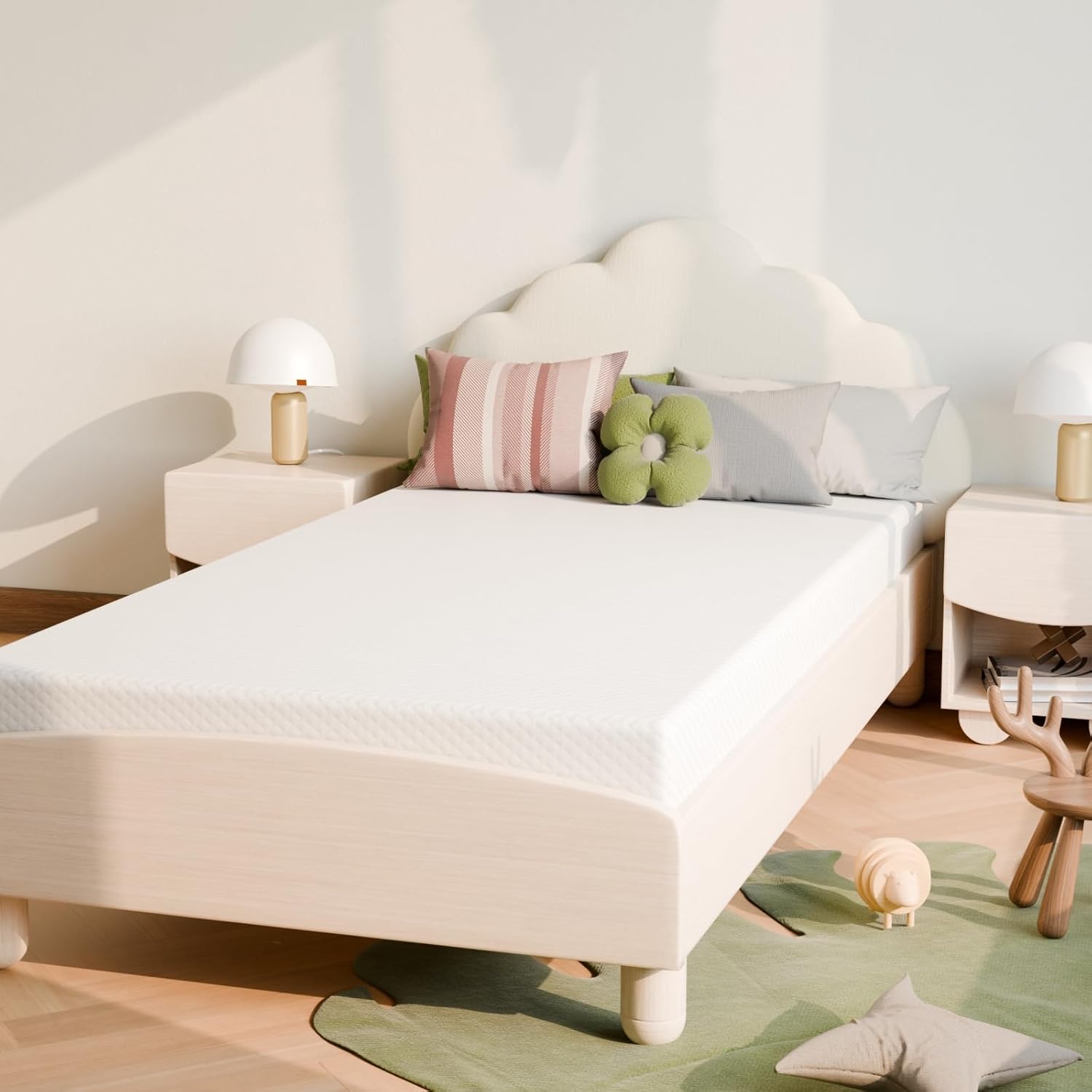
This gel memory foam mattress features a slim, low-profile design that makes it especially suitable for bunk beds and similar setups. It offers medium-firm support to help maintain proper spinal alignment while relieving pressure points, which is important for growing children. The cooling gel infusion helps regulate temperature for a more comfortable sleep, and its fiberglass-free, certified-safe materials add an extra layer of reassurance for kids’ use. Its structure is specifically designed to fit well within bunk bed safety limits.
Pros
- Low-profile construction is ideal for bunk beds, helping maintain proper guardrail safety clearance.
- Gel-infused memory foam helps regulate temperature and keeps sleep surface cooler.
- Medium-firm feel provides a balanced mix of support and comfort for growing kids.
- Fiberglass-free and certified materials make it a safer choice for children’s sleeping environments.
- Pressure-relieving foam layers help reduce discomfort and improve sleep quality.
Cons
- Thinner design may feel less plush compared to thicker mattresses.
- Limited edge support, which may matter for active kids using the top bunk.
- Memory foam responsiveness may feel slower compared to spring-based options.
- Basic construction without advanced multi-layer or hybrid features.
Verdict
This is a strong choice specifically for bunk beds thanks to its low height, safety-focused materials, and supportive feel. It’s particularly well-suited for parents prioritizing safety clearance and simple, reliable comfort for kids.
Naturepedic Organic Kids 2-in-1 Mattress

This organic kids mattress is designed with natural materials like certified organic cotton and an innerspring support system, avoiding polyurethane foam, adhesives, and chemical flame retardants. Its dual-sided design includes a waterproof surface for younger children and a quilted side for added comfort as they grow. The breathable coil structure promotes airflow and temperature regulation, which can help maintain a comfortable sleep environment. Its supportive and relatively low-profile construction makes it suitable for bunk beds, especially where safety and non-toxic materials are a priority.
Pros
- Certified organic and non-toxic materials provide a safer sleep environment for children.
- Dual-sided design offers long-term usability, with a waterproof side for younger kids and a softer side as they grow.
- Innerspring construction allows better airflow compared to foam mattresses, helping with temperature regulation.
- Firm support helps promote proper spinal alignment for growing bodies.
- No foam, adhesives, or flame retardants, appealing to parents seeking cleaner materials.
Cons
- Firm feel may be too rigid for some children who prefer a softer sleeping surface.
- Heavier construction makes it harder to move or rotate compared to foam mattresses.
- Higher price point compared to standard kids mattresses.
- Less contouring comfort than memory foam options.
Verdict
This is a premium, safety-focused choice that fits very well with bunk bed use due to its supportive structure and low-profile design. It’s best suited for parents prioritizing organic materials and durability, though it may feel too firm for some kids and comes at a higher cost.
Nectar Kids Dual-Sided Memory Foam Mattress
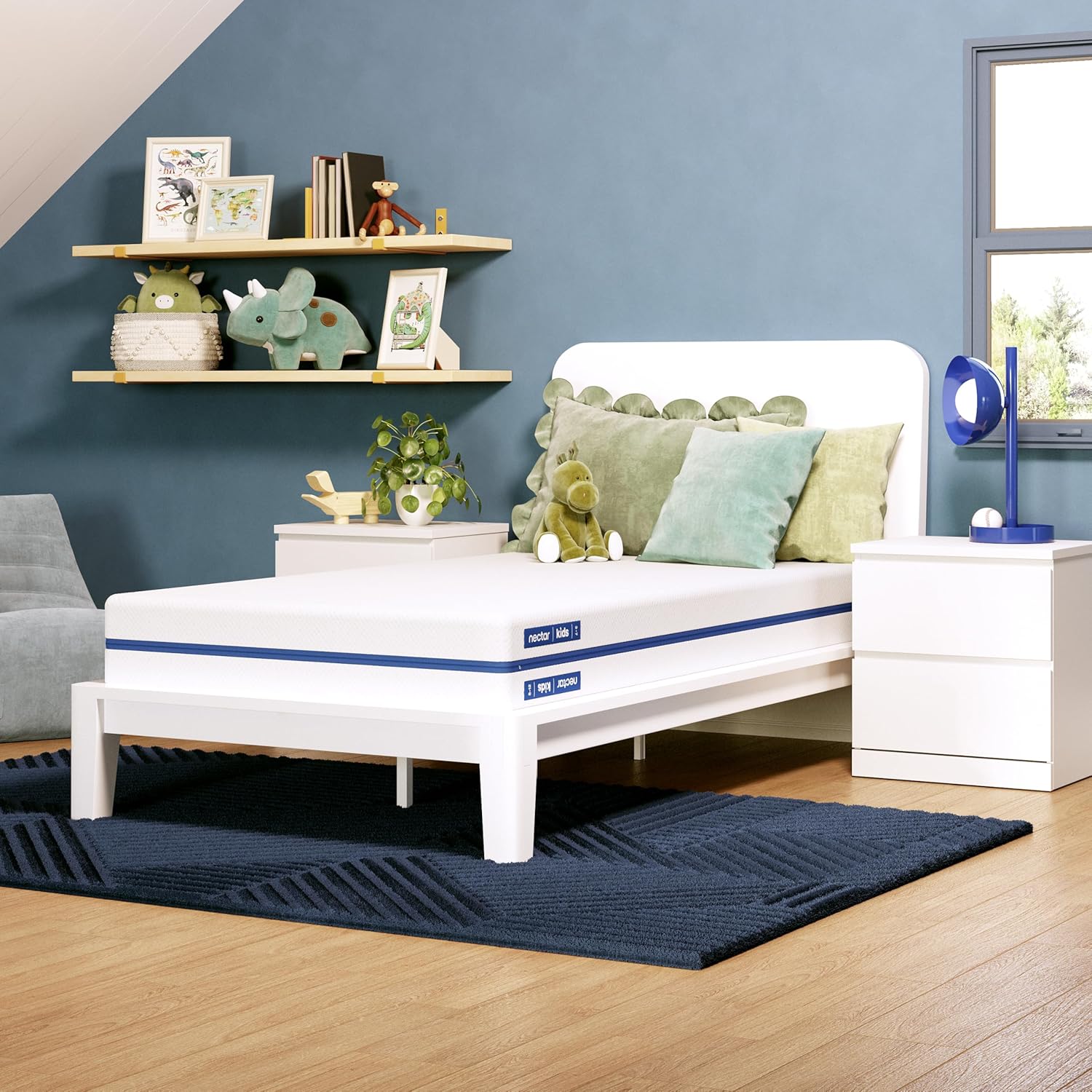
This dual-sided memory foam mattress is designed specifically for growing children, offering two firmness levels that adapt as they age. One side provides firmer support for younger kids, while the other offers slightly softer cushioning for older children. Its pressure-relieving foam helps support proper spinal alignment, and the cooling, washable cover adds convenience for everyday use. With a relatively slim profile, it can be suitable for bunk beds, especially when safety rail height is a concern.
Pros
- Flippable design allows the mattress to grow with the child, offering two firmness options for different stages.
- Memory foam construction provides pressure relief and supports proper spinal alignment.
- Cooling, removable, and washable cover makes it easy to maintain hygiene for kids.
- Fiberglass-free and certified materials enhance safety for children’s sleeping environments.
- Good edge support for an all-foam mattress, which is useful for bunk bed use.
Cons
- Firmness levels may feel too firm for some children, especially side sleepers.
- All-foam design has limited bounce, which some kids may prefer for comfort.
- Pressure relief may be less effective compared to higher-end foam or hybrid models.
- Limited size options may not suit all bunk bed configurations.
Verdict
This is a well-rounded and versatile option for bunk beds, thanks to its low profile, dual-sided design, and safety-focused materials. It’s a strong recommendation for parents looking for a long-lasting mattress that adapts as their child grows.
How It Works & Who Needs It
A mattress designed for a child’s bunk setup typically focuses on safety, support, and space efficiency. These mattresses are usually lower in height to fit within guardrail limits, while still offering enough cushioning to support growing bodies. Materials like memory foam, innerspring coils, or hybrid layers work together to distribute weight evenly, reduce pressure points, and help maintain proper spinal alignment. Many also include breathable or cooling features to keep kids comfortable throughout the night.
This type of mattress is especially useful for families who want to maximize bedroom space without compromising sleep quality. It’s also ideal for kids who share rooms or enjoy the fun and functionality of bunk beds.
- Children using bunk beds where height clearance is important for safety.
- Parents looking for supportive sleep surfaces for growing kids.
- Families needing space-saving sleeping solutions.
- Kids who tend to move a lot and need stable, even support.
What to Look for When Choosing the Right Option
When shopping for the best sleeping surface for a child’s bunk setup, there are several key factors to consider to ensure both safety and comfort. First, mattress height is critical. Since bunk beds have guardrails, a lower-profile mattress helps prevent the sleeper from being too close to the edge. This is one of the most important safety considerations.
Next, focus on firmness and support. A medium-firm feel is often recommended for children because it promotes proper spinal alignment without feeling too hard. Materials also play a big role—memory foam offers contouring comfort, while innerspring designs provide better airflow and bounce. Cooling features such as gel infusions or breathable covers can help prevent overheating, especially for kids who sleep warm.
Durability and safety certifications are equally important. Look for mattresses made without harmful chemicals and with certifications that ensure low emissions. A removable and washable cover can also make maintenance much easier for parents.
- Low-profile design to maintain bunk bed safety clearance.
- Medium-firm support for proper spinal alignment.
- Breathable or cooling materials for temperature control.
- Certified safe and non-toxic materials.
- Easy maintenance features like washable covers.
- Avoid overly thick mattresses that exceed guardrail height limits.
- Do not choose extremely soft options that lack proper support.
- Skip low-quality materials that may sag quickly.
- Avoid mattresses without safety certifications.
Common Pros and Cons
Pros
- Designed with safety in mind, often featuring lower heights that fit bunk bed requirements.
- Supportive construction helps promote healthy spinal alignment for growing children.
- Available in a variety of materials, allowing parents to choose based on comfort and preference.
- Many options include cooling or breathable features for better sleep quality.
- Compact design works well in shared or small spaces.
Cons
- Thinner designs may not feel as plush or luxurious as standard mattresses.
- Limited thickness can reduce long-term durability in some models.
- Edge support may be weaker, especially in all-foam options.
- Some materials can retain heat if not designed with cooling features.
- Fewer premium features compared to full-size or adult mattresses.
Is It Worth It?
For families using bunk beds, choosing the right mattress is more than just a comfort decision—it’s a safety necessity. A properly sized and designed mattress ensures that guardrails function as intended, reducing the risk of falls while still providing a comfortable place for children to sleep. This makes it a worthwhile investment for both peace of mind and better sleep quality.
While these mattresses may not always offer the same thickness or luxury feel as standard options, they are specifically built to meet the unique needs of bunk bed setups. When you prioritize the right balance of support, safety, and durability, you’re investing in your child’s sleep health and overall well-being. In most cases, that makes it absolutely worth it.